

We're honored to feature new poetry by Dwaine Rieves in Issue Three of Orson's Review. Issue Three of Orson's Review was published on September 24th, 2019.
We're also very fortunate for the time Dwaine took to chat with us about the poet’s journey. Check out the discussion below.
*The following interview involves Orson's Publishing (OP) and Dwaine Rieves (DR).
OP: How did your journey with the written word begin?
DR: I suppose the journey began with my mother. She taught me to read—not the typical words that a first grader must recognize, such as “ball” or “bat,” but the truly difficult words like “the,” a word that has no tangible “thing” to go with it. I still remember her laughing at how difficult it was for me to learn the word “the.” She was laughing as if she saw herself in me, the difficulty in learning a word that represents nothing you can see, touch, taste or smell. But you can say “the” and you can hear it—the word as a tool, a sensation-instigator that proves why and how communication matters, that connecting with someone matters. And if that word can be encrypted in text—ah, we have some magic!
OP: Is being a poet your primary occupation?
DR: I trained as a critical care physician and practiced intensive care medicine for a number of years. My voyage into the world of intensive care medicine carried me into intensive words, which is perhaps the essence of poetry. The travels have also included research years at various institutions. Today, I ponder a lot, write when I must and sometimes assist researchers in developing new drugs that help doctors see inside the body. Remember the “contrast” agent injection when you may have had an MRI—that contrast agent is a drug. It’s a lot like a difficult word; it helps us see better inside the body.
OP: What about this these poems are you most proud?
DR: I’ve long been fascinated by the gardenia. The scent alone tells such a rich story. And that ever-so tender, gently yellowing vanilla blossom—goodness, what a heartbreaking tale of perseverance despite the tragedy it tells. The poem “Pearl Street Gardenia” somewhat evokes the nobility of the gardenia. I grew up with gardenias in the South—the flower of funerals, births and weddings, death and starting over. The gardenia is not native to the South. Its history aligns with the slave trade—the beautiful flower imported from Africa and similar tropical regions. Supposedly, the gardenia was Freud’s favorite flower. Not surprising, I suspect, given those incredible subconscious stirrings invariably conjured by a gardenia blossom.
OP: Tell us about your writing process. Do you approach all pieces of writing in the same way?
DR: I do approach poetry creation a bit differently from prose. I try to give poetry a free space to appear if it must—and if it doesn’t then I’m okay with that because the “must” aspect is determined more by the restless muse than me. I place poetry in a realm sacred to inspiration and insistence. Prose, on the other hand, typically sits in a bleacher watching as the story unfolds. Prose is a spectator-parent thing that, if we’re lucky, involves the spectator-parent-writer in an on-field brawl.
OP: As a child, what did you want to be when you grew up? How has that impacted your writing?
DR: I don’t recall ever really wanting to “be” someone or something when I was a child. I did have a strong desire to understand, to make sense of the world in which my mother insisted I read.
OP: Tell us about the biggest sacrifice you’ve made while pursuing writing.
DR: I can’t help but view my years in the day job—helping to keep the conveyor belt of new drugs rolling at the Food and Drug Administration—as a bit of a time sacrifice, in that the work sometimes left my brain so spinning any creative endeavors were subjugated to the need for sleep and some degree of physical-mental recovery! Still, I learned tremendous things at the FDA, including how much we should value the incredibly dedicated scientists who are still hard at work in helping us live better.
OP: How many books do you read in a year?
DR: I tend to gobble up poetry books, so it is very difficult to estimate. Probably at least one poetry book a week—though that’s a wild guess. I’ve also started reading fiction much faster than I used to, and most non-fiction flies by. Nothing can be finer than setting down with a cup of coffee in the gloaming time when a book’s sharing an important story.
OP: Do you attend poetry readings? If so, tell us about the best one you’ve ever attended -- what made it so good?
DR: I treasure poetry readings—far more so than prose readings. It’s hard to single out the “best” ones—I treasure every voice, even the ones that I remember because they’re not especially pleasant! Many years ago, hearing Carl Philips read for the first time brought a grand new appreciation for his unique (and magical) syntax. Too, hearing Stanley Kunitz read despite still being partially paralyzed from a stroke was an unforgettable experience, an inspiration. Ah, so many gardenias!
OP: What do you want most out of your literary community?
DR: I wish I had a larger literary community. I tend to be shy and probably worry too much about making impositions on potential readers. I love it when others share their work with me! I learn so much from close readings of those special offerings. All told, perhaps a literary community is not so very important as simply having some form of community—I’ll call that family.
OP: Do you believe that an MFA is crucial to success as a poet today?
DR: Not at all. Yikes, I sometimes even wonder if it is a drawback. I have little doubt that it helps in terms of building an academic background/historical understanding of poetry as well as help in networking and promotion of the student’s work. All in all—mixed thoughts. For some folks, an MFA is probably a godsend. For others, a dog that only keeps barking at the threat of unpaid tuition.
OP: What do you cross your fingers for as a poet?
DR: The discovery of a blooming gardenia.
OP: Where do you see your journey with the written word going?
DR: Many folks dread talking about their next projects for fear of jinxing the whole business. Yet, when you’re used to failure, you’ve freed yourself from the chains of self-protection—meaning you’ve freed your inner yard-dogs to run off if they care to. And my latest yard-dog is a collection of poetry that continues my exploration of stories from Southern cemeteries, particularly the men who probably wanted to be remembered for something better than the stone-engraved words below which they’re buried. It’s tentatively called, Men From Screaming, and includes many line breaks defined by fed-up women. I’m also working on a non-fiction project that explores the science of self-being, the mind as it has evolved through medical history. The dogs here just won’t stop barking. They tend to pee on the gardenia bushes. And still some keep blooming.
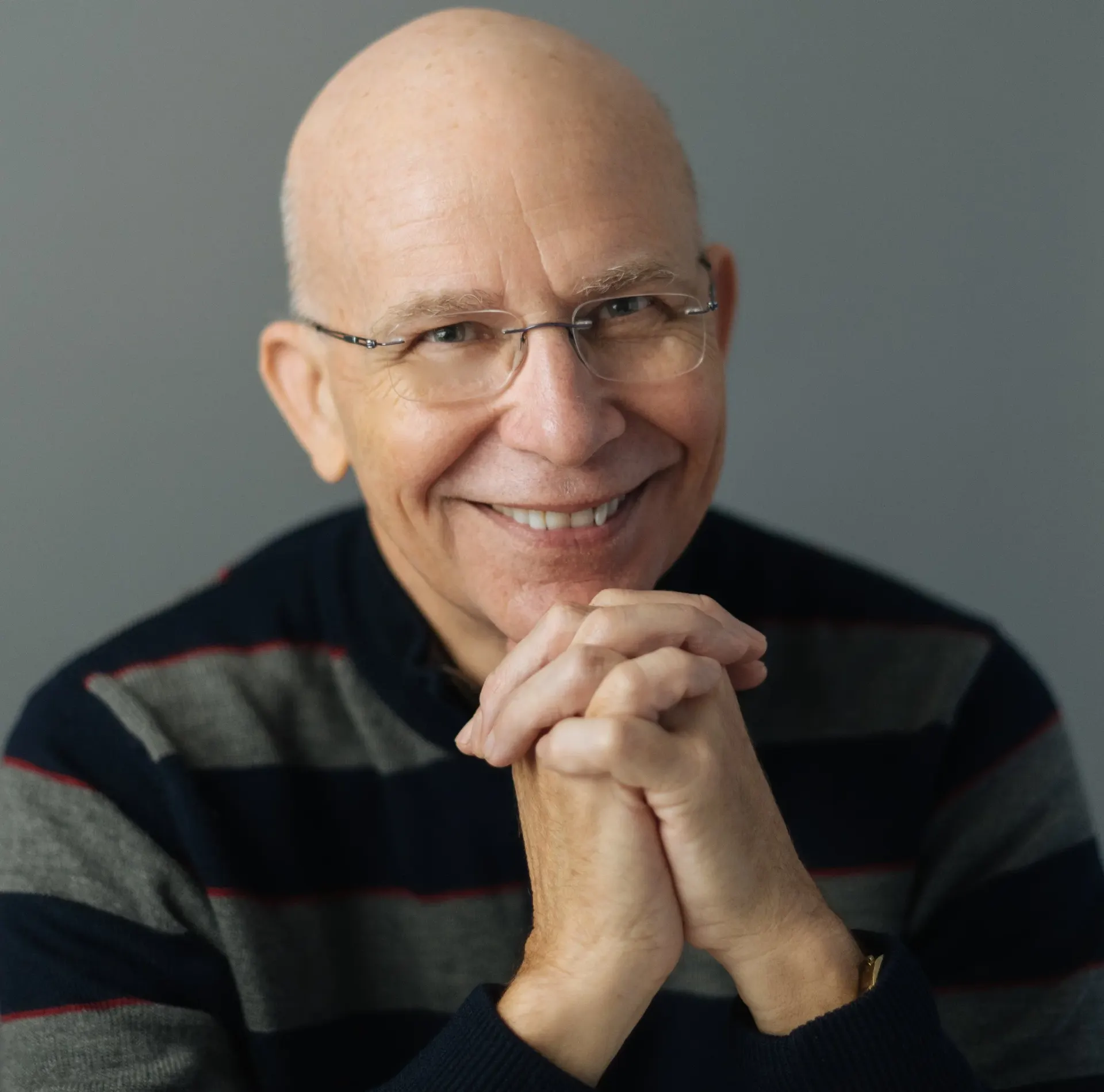
Dwaine Rieves was born and raised in Monroe County, Mississippi. He worked as a garment plant custodian and Frisco Railroad brakeman before attending Ole Miss and graduating from the University of Mississippi School of Medicine. He works odd times as a research pharmaceutical scientist and unbelievably odd times with poetry. His collection, When the Eye Forms, won the 2005 Tupelo Press Prize for Poetry. Shirtless Men Drink Free is his first novel.
Be sure to check out Dwaine’s poetry in Issue Three of Orson’s Review.