
We're honored to feature new poetry by Rose Maria Woodson in Issue Three of Orson's Review. Issue Three of Orson's Review will be published on September 24th, 2019.
We're also very fortunate for the time Rose Maria took to chat with us about the poet’s journey. Check out the discussion below.
*The following interview involves Orson's Publishing (OP) and Rose Maria Woodson (RMW).
OP: How did your journey with the written word begin?
RMW: I remember sitting on the side of a bed, with my mom and we were working on a poem together.
I’ve been writing since I was five years old, but there was nothing extraordinary about those efforts. I was a kid writing as a kid. No genius. No polish. Just cute little poems and stories and a play, I think, in 8th grade. In high school, I wrote for the school paper and contributed to the teen page of the Chicago Daily Defender.
OP: Is being a poet your primary occupation?
RMW: I wouldn’t say occupation. Thankfully, it’s my primary focus at this stage of life.
OP: What about these poems are you most proud?
RMW: If I had to generalize, I’d say that the emotional/thematic end is an amplification of the beginning and not merely an echo. I don’t want my readers to end up in the same place as they started. At least I hope not. I like the language for the most part and that references to the natural world help move the pieces along. For “Lost Light”, I’m proud of the fact that I ended it where I did. One of my professors told me I have a tendency to submit two poems as one. “Lost Light” is two-thirds of a poem that didn’t work in the longer version. It did work in the shorter form. I like the humor in the Sesame Street poem.
OP: Tell us about your writing process. Do you approach all pieces of writing in the same way?
RMW: Every poem, every story is organic. Each work follows its own path. That creative spark may start with an image, something I’ve seen on the news, in a movie, a nature video. Or it may start with a line slipping inside my head. I remember driving home late, late one night, southbound on Lake Shore Drive. It was raining and, thankfully, not a lot of cars. Three dogs ran across the Drive. They all made it safely to the side with the apartment buildings. That sight stayed with me a long time until I made a poem out of it. Sometimes I’ll start with a point of view, an idea I want to expand upon and build a scene around that concept. Persona is important: I’ve written about miscarriages and divorces. I’ve gone through neither. But the speaker in the poem spoke to that thematic development. Maybe I should be writing plays and short stories.
If there is one constant in my process, it’s revision. Even as I’m writing the poem, I’m already revising it.
OP: As a child, what did you want to be when you grew up? How has that impacted your writing?
RMW: Believe it or not, I wanted to be a phlebotomist. A blood technician. That passed, even though I’ve always had a love of science. That young career choice hasn’t had an impact on my writing, but I think a bit of science pushes in now and then, especially when there’s a nature theme.
OP: Tell us about the biggest sacrifice you’ve made while pursuing writing.
RMW: Sleep. Ego.
OP: How many books do you read in a year?
RMW: I don’t have a set number. Sadly, I’ve fallen off. Right now, I’m reading Inheritance by Christopher Paolini. Love it.
OP: Do you attend poetry readings? If so, tell us about the best one you’ve ever attended—what made it so good?
RMW: I’m fighting severe arthritis, so readings are a luxury I can’t afford at the moment. However, I remember Rita Dove’s reading. Loved it. Her work, the way she read. I was lucky enough to get her autograph afterwards. She was very warm, down-to-earth.
OP: What do you want most out of your literary community?
RMW: There are so many exciting things happening in the literary community here. Outreach programs in shelters for the homeless, poetry programs in inner city schools, geriatric journals for those in nursing homes. Readings galore. This is what I want out of a literary community: inclusion, energy, respect for voices and stories that may not flow through the tradition of privileged academia. I want honesty of constructive criticism, honesty of praise when warranted, honesty rooted on the page, in the craft of a piece. I’m thinking of workshops here. I think it’s also important for writers to support one another. That’s a many splendored thing given the fact that we’re all in different places and at different stages. Sometimes it’s as simple as buying that author’s book or attending a reading. Other times it’s so labor intensive. The poets who not only write, but serve as creators and editors of literary journals do a great job of promoting others, of providing venues for voices otherwise unheard. The professors, top-notch writers themselves, who also serve as first readers, advisors, who make time to answer questions, epitomize support. I want kids writing and reading. That’s all I want.
OP: Do you believe that an MFA is crucial to success as a poet today?
RMW: There are tiers of success, paths of ambition. Does the poet want to teach? Then the MFA is crucial. Does the poet want to be published in the upper echelon of journals and reviews? Then the MFA is crucial. One of the by-products of any MFA program is contacts. You swim in a gifted pool of future editors, reviewers. Your professors can direct you. In the real world, if there are two submissions of equal talent, one with an MFA, one without, I think the degree will nudge that one submission ahead.
If success is to be the best writer that you can be, you may be able to do that without an MFA. Maybe someone doesn’t have the means or the money to enroll in grad school. What then? Read. Read. Read. Attend readings if you can. Revise. Submit. Read the rejection letters carefully. If you’re lucky, you may get a personal note here and there, stating what the readers enjoyed, maybe even suggesting that you submit again. And read.
If success is to be included in the canon of literature, at this point in time, you’d better have that MFA. And more. Period. Power replicates itself. Like responds to like.
I attended the MA in Creative Writing at Northwestern University. I benefitted from being in that face-to-face community of writers. I had poetry workshops with Reginald Gibbons, Simone Muench and Ed Roberson. I am a better writer because of their workshops. I learned to analyze, organize my writing into more cohesive creations. The reading lists introduced new writers to me. I became more aware of the historical trends in poetry.
Let’s face it: as writers, many times we work alone. But there is a river of tradition into which our work flows. I think it’s important to know what has preceded you.
OP: What do you cross your fingers for as a poet?
RMW: I wish upon a star that I write better poems, bigger poems, that I never bore my readers. And, most of all, I cross my fingers that my readers will find me.
OP: Where do you see your journey with the written word going?
RMW: I see longer poems, poems based upon social issues. I see more short stories. And a picture book. I dream.
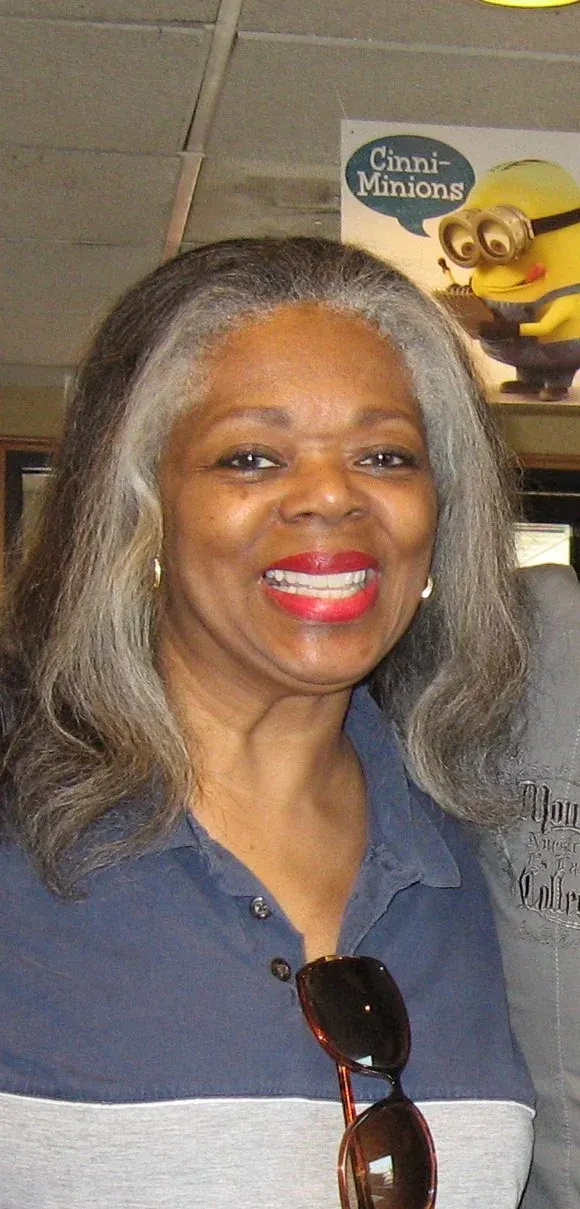
Rose Maria Woodson holds an MA in Creative Writing from Northwestern University and an MA in Community Development from North Park University. She is the author of two chapbooks, Skin Gin (2017 winner in the QuillsEdge Press chapbook contest) and The Ombre of Absence (Dancing Girl Press) as well as the mini-chapbook, Dear Alfredo (Pen and Anvil Press).
Her poems have been published in numerous journals including Kettle Blue Review, Clarion, Gravel, Wicked Alice, OVS Magazine, Magnolia: A Journal of Women’s Socially Engaged Literature Volume II, Jet Fuel Review, Stirring, Scape Goat Review and Mojave River Review. Her short story, “Cupcake Payne”, is forthcoming in Issue 46 of Oyez Review.
Be sure to check out Rose Maria’s poetry in Issue Three of Orson’s Review, which will be published on September 24th, 2019.