We're honored to feature new poetry by Neil Carpathios in Issue Three of Orson's Review. Issue Three of Orson's Review was published on September 24th, 2019.
We're also very fortunate for the time Neil took to chat with us about the poet’s journey. Check out the discussion below.
*The following interview involves Orson's Publishing (OP) and Neil Carpathios (NC).
OP: How did your journey with the written word begin?
NC: In kindergarten I fell in love with my teacher, Mrs. Smith. I wrote a small poem for her hoping to woo her. I left it on her desk in the morning and all day tried to gauge her behavior. Had she read it? Did she like it? But she acted the same as every day, even when she addressed me. I was deflated. Then at the end of the day, she called me to her desk before I left the room. She explained that no one had ever done something like that for her and that she was deeply moved. However, she did sneak something into the conversation so that as I walked out I sensed it would never really work between us as a couple (something about her husband, I think). But in retrospect, I realize that even at that young age I sensed that writing was an intimate, special way to communicate strong feelings.
OP: Is being a poet your primary occupation?
NC: That all depends on the definition of “occupation.” The answer is yes if “occupation” is taken as the main driving inner force, the engine that runs my psychic life, the vital core of creative spiritual unfoldment, the dedication to daily craft. The answer is a most definite no if “occupation” is taken as an activity that is the primary source of income. We poets are the monks of the literary world. We take an oath of poverty! My job, my career is as an English professor.
OP: What about this these poems are you most proud?
NC: In these poems I tackle a rather difficult subject, and one that I never have dealt with before (suicide of a friend). I am fairly pleased with the raw honesty of certain aspects of the situation as I saw them.
OP: Tell us about your writing process. Do you approach all pieces of writing in the same way?
NC: My “process” is pretty typical, I think. I read, jot down notes, make observations, try to be open to the world and people around me. I write a poem, reread it several times, revise, etc. On a deeper level, I honestly try to bring great pressure to the page in terms of my inner motivations. I want to write poems that are humanly important (at least, to me), that try to say something that I believe needs my effort. I enjoy all sorts of poems, but my favorites—and the ones I try to write—attempt to be more than merely witty or well-crafted or clever. I relish great performances of all kinds, but I am most deeply moved by art that is more than just a “performance.”
OP: As a child, what did you want to be when you grew up? How has that impacted your writing?
NC: I wanted to be a physician, like my father—and only for that reason (a young son’s emulation of his hero). As I grew older, I knew that this was not my destiny or skill-set. However, I often write about the body, literally and as a metaphor. I grew up around a person that on a daily basis dealt with bodies, with life and death. He was a surgeon. To an imaginative boy, this was a powerful notion. Later, and still, it is a powerful notion to a practicing poet.
OP: Tell us about the biggest sacrifice you’ve made while pursuing writing.
NC: No real sacrifices. I chose and choose to do what I set out to do. I am grateful for my life’s path. I embrace the hurdles, the disappointments, and the small victories. It is all a rich journey I continue to learn from.
OP: How many books do you read in a year?
NC: I read dozens. However, I tend to be a “grazer.” I might have a dozen books on my desk that I dip into and out of as the spirit moves me. I don’t often read books from beginning to end. I read like I eat: I enjoy small plates, tapas! I don’t feel the pressure to complete big meals!
OP: Do you attend poetry readings? If so, tell us about the best one you’ve ever attended—what made it so good?
NC: I enjoy hearing other poets. They inspire me. I have attended countless readings over the years. I would say that the best one was by Galway Kinnell at Smith College in Massachussetts. The event was special for many reasons. I bumped into Kinnell on the street earlier that day and recognized him, to his surprise! Then at the reading in the evening, many well-known writers and poets attended, whom I recognized! Kurt Vonnegut, Jack Gilbert, and others. The reading itself was wonderful and highlighted by a special moment: Kinnell had just finished reading his famous poem, “Wait,” and a young woman in the audience called out, “Read it again, Galway, read it again!” The poem is about being patient in the healing process after a broken heart. It was fairly clear that this young woman truly needed to hear the poem again. Instead of politely declining or even commenting, Kinnell just recited the entire poem once more for her! It is the odd, unique moments that occur spontaneously at certain readings that make them memorable, I think.
OP: What do you want most out of your literary community?
NC: I appreciate the opportunity to periodically be around other poets and writers—at readings, book events, etc. Writing is an activity that can be very isolating. It is good to connect with other poets. The promotion of the literary arts is also important. I take my hat off to places that make an effort to do this in various ways, that value the written word.
OP: Do you believe that an MFA is crucial to success as a poet today?
NC: A lot has been said and debated about this question. I don’t think it is absolutely necessary to the development of a poet. I think it depends on the individual. Some poets are able to grow through their own self-study outside of institutions. Other poets benefit from the environment of a graduate program. I don’t like when certain people condemn MFA programs as factories that merely churn out cookie-cutter writers. There is a long record of important poets and writers who did pass through MFA programs (too many to name!). Personally, I learned a lot during my two years at the Iowa Writers Workshop. I wouldn’t trade it for anything.
OP: What do you cross your fingers for as a poet?
NC: That I will still feel the desire, drive and energy to confront the blank page, to confront myself over and over moving into the future. Writing poetry can be emotionally draining at times. Disappointment often creeps in. A life of poetry requires endurance, perseverance, and luck.
OP: Where do you see your journey with the written word going?
NC: I hope to continue to write poems for as long as I live. I also hope to be brave and follow whatever creative impulses present themselves. For the past year I have been working on a hybrid book consisting of over four-hundred aphorisms combined with prose poems and linked poems. So, at least at the moment, I’m pleased that I’ve tried something a little different from what I’m used to doing. Part of the job of a poet is to be open to finding new ways of matching expression to form. Whether or not such projects ultimately succeed—that is the question!
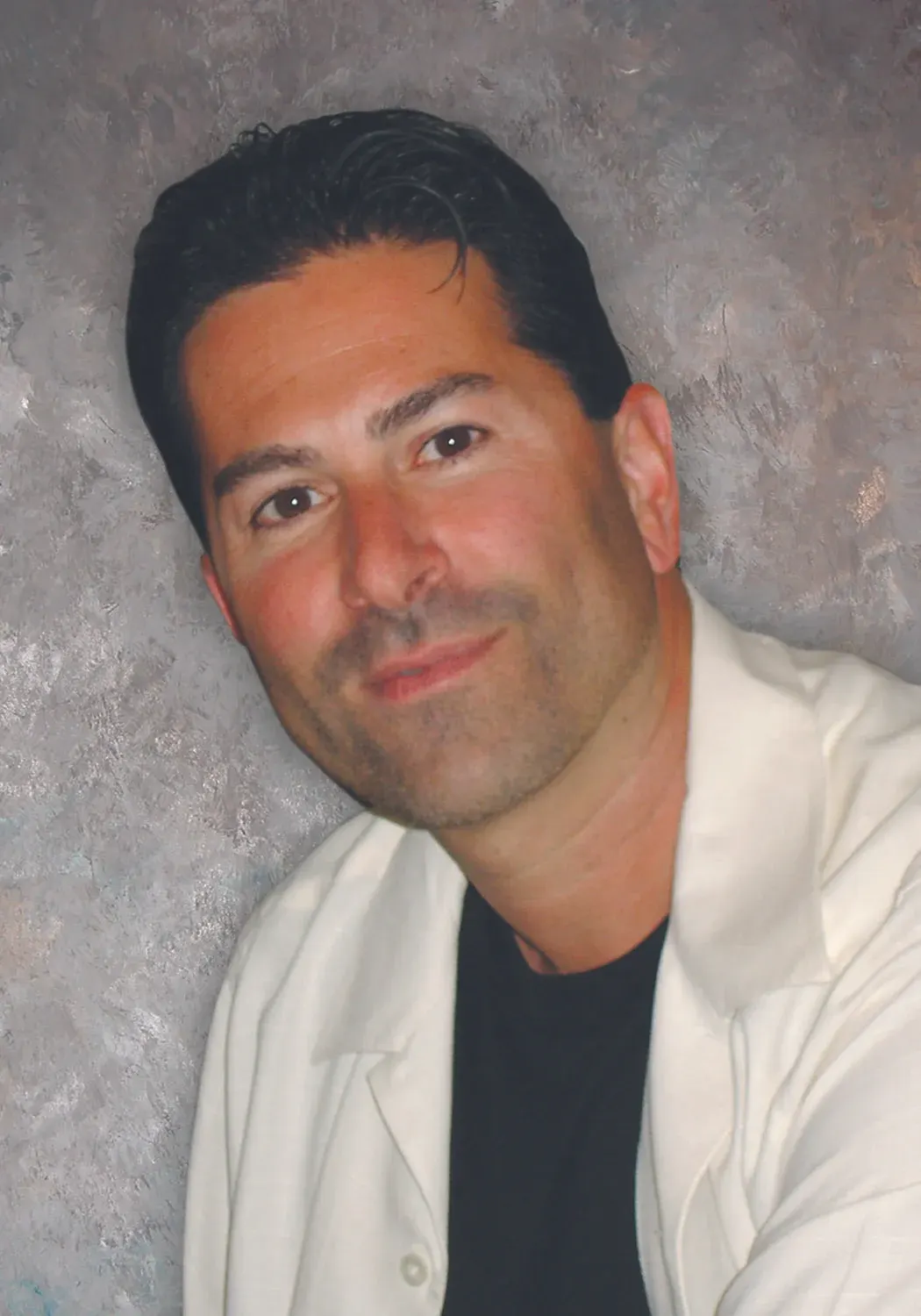
Neil Carpathios is the author of five full-length poetry collections and several chapbooks. His most recent works are Confessions of a Captured Angel (Terrapin Books), Far Out Factoids (FutureCycle Press), and The Function of Sadness (winner of the Slipstream Press Chapbook Prize). He also edited the anthology Every River on Earth: Writing from Appalachian Ohio (Ohio University Press). He teaches English and Creative Writing at Shawnee State University in Portsmouth, Ohio.
Be sure to check out Neil’s poetry in Issue Three of Orson’s Review.