
We're honored to feature new poetry by Ricky Garni in Issue Three of Orson's Review. Issue Three of Orson's Review will be published on September 24th, 2019.
We're also very fortunate for the time Ricky took to chat with us about the poet’s journey. Check out the discussion below.
*The following interview involves Orson's Publishing (OP) and Ricky Garni (RG).
OP: How did your journey with the written word begin?
RG: I was a late bloomer and slow study – my greatest love as a kid was music and art – I drew constantly and lost a baby tooth to a piano, jumping up and down in joy listening to the sounds it made. My older brother was always the writer when we were growing up – poetry mostly – so I felt as though that position in the family had been filled and I didn’t bother (much as they once asked why such a reflective and sombre type as John Entwistle had joined The Who and he responded by saying “It was the only personality left available.”) What turned me around occurred in the space of about 18 months in high school: I spent a summer in Costa Rica in the 70s back when there were literally no books available to read in English (and few people who spoke English, even in San José.) After much hunting, I finally tracked down two books: Richard Brautigan’s Revenge of the Lawn and (to my own shame) Jacqueline Susann’s Once Is Not Enough. My only recollection of OINE now is that it contained lots of ‘vitamin’ pills, models, sporty cars, cocktails and old men with burly girths and silvery chest hair. And that’s about it.
Richard Brautigan was definitely a more lasting delight. As with (I imagine) many writers and other artists, I felt as though I loved him not only for his wonderful pale-marble movie imagery, but I also felt as though he gave the world permission to write in a way that had not been previously permitted, and certainly wasn’t much in fashion. This was before terms like micro-fiction, flash fiction, etc. were in popular use as I recall – in fact I think you have to go back to Baudelaire, Rimbaud and (later) Reverdy for the literary antecedents – prose poetry I believe was the only term used – and I am not even certain if Brautigan read any of those guys (he seemed more like a Twain man to me.) If you haven’t tried Brautigan, please seek him out: his descriptions of Dairy Queens in a Montana winter, a child saying ‘High Building in Singapore’, the wheres and whatfors of Death Row last meals, or even a 44:40 shotgun shell leaving the barrel (“slow moving, like a fat man opening a door”) are truly small miracles.
The second event was that I was lucky enough to be accepted into an honors writing class at my high school – I actually applied as an act of vengeance against my 3rd year/2nd term English teacher who had given me a D in the class and used to write sarcastic critiques complete with air quotes (before they were fashionable) on my heartfelt prose. It was the worst semester of my school career followed by the best: 4/1 – a class that met twice a week in the professor’s beautiful, African art and artifact-laden apartment, drinking cider and eating donuts and workshopping the one free-assignment we were given per week (along with one very heady fiction reading requirement.) He even brought guest speakers to the class to discuss writing and literature and technique (cross-legged on the floor). Once we were lucky enough to have the distinguished poet Peyton Houston visit us – a man who wrote poetry of grace and beauty and who dressed in bespoke custom suits with a golden watch fob. He was 6’7”. stately and elegant, and worked as the Vice President of Equity Corp, an investment firm in NYC. He did all his writing on his commute between Connecticut and the city every day. Needless to say, he blew our collective impressions of what a poet could be, particularly in the slightly post-beat, full-on Rod McKuen/Motorcycle Maintenance/City Lights/Strawberry Statement/Hippie Era, and we welcomed the new look of fresh and jarring possibility. When a student asked him what he considered to be his primary occupation, he said, “My job is in an investment firm; my work, my livelihood, and my occupation, is poetry.” Once again, although from a different lens, I felt as though a writer had given a generation of students and aspiring writers permission to do things differently.
OP: Is being a poet your primary occupation?
RG: As Peyton Houston might say: yes. Although my time is equally divided between writing poetry and composing music. My work as a graphic designer pays for my pot pies, camera lenses and typewriters. That being said, I feel very sorry for those who teach and write – at least those who teach full time – I have tried it before and I find it extremely difficult. Beyond just the hour crunch, it seems as though you must have the skills and discipline to relinquish the rigidity that one must exercise as a functional and responsible teacher and evaluator of work in order to get the job done and done creatively and well. I just can’t imagine switching gears like that – as they somehow must. If there is more of a looseness (and perhaps even gooseyness) to your teaching, it would seem like a more natural transition. Otherwise, it’s like playing tennis on concrete, rather than clay or grass, which invites a little more ballet into your life and game. That being said, hats off to anyone who can. I admire them beyond measure.
OP: What about these poems are you most proud?
RG: I don’t mean to sound coy, but I never feel proud of my work exactly – I usually feel either satisfied or unsatisfied, content or embarrassed – and embarrassed with increasing frequency given the invention and pervasiveness of the internet!
If I do feel satisfied with a poem, it’s usually because I have spoken of something very directly that was based in either a true experience or an unvarnished feeling that I was able to express simply and cleanly. If I am not satisfied (or worse, embarrassed) I find that in reviewing the work, I see what David Foster Wallace used to call the ‘Look Ma! No Hands!’ school or writing – someone trying to be cute or clever or tricky or coy and that kind of windbag just really gets on my nerves. Of course that windbag is me, so it can get complicated that way, and a little annoying, and of course, embarrassing.
With that criteria in mind, I do feel good about ‘Greg’ and ‘Therapy’ in Orson’s. Neither of them get on my nerves and I am very satisfied with both of these small pieces. And Greg is a real guy, and an amazing guy, and his name is really Greg, and even though we work just a block away from one – it’s true, to this day we still haven’t gone once to the Waffle Shop. And we both love waffles. And we work together every day, and we still haven’t gone in 20 years. Probably never will.
OP: Tell us about your writing process. Do you approach all pieces of writing in the same way?
RG: I write everything on a manual typewriter – well, probably about 90%, with the remainder being by hand or on a laptop. I have a great number of typewriters and I look around and see which one appeals to me and I plop it down on the dining room table. I would say (also) about 90% of my writing is done in this one chair, at the table, unless I am traveling.
I sort of adhere to Sam Shepard’s idea “never leave the desk when you are stuck.” I usually have an idea of what I want to do next when I close up the case. And sometimes an idea will come when I’m wasting time looking up peculiar pieces of information (one night, for example, I dreamed that I didn’t know how much money Peter Lorre had in his wallet on the day he died, and so I looked it up – to no avail – when I went downstairs that morning. Still, though, I wrote about it anyway.) or any individual or event or object that might seem peculiar enough (but not too much) to be a departure point.
Like many, an idea will come to me in the shower or while riding a bike or waiting in line – I try to maintain the key word in my head – or a series of them – so that I will know where to begin once I arrive home. Write about goats and sunlight and washing machines I scribbled down recently on the bus -– luckily I was close enough to home to remember what the hell I meant by that.
I also find inspiration in ekphrastic writing, particularly when it pertains to industrial or commercial art – stuff like old Lysol ads or toothpaste ads like Pepsodent with Irium (Irium? Who knows?) in LIFE Magazine – as well as error, especially typos. Often I find myself trying to remove the wrong typos in a piece, while preserving the good ones.
I also have a number of writers I will scan a bit before I write – two of my favorites –and I mean this sincerely - are Emily Post’s Blue Book of Social Usage (1936 edition –although the postwar one is also great) and Webster’s New International Dictionary (1929 and 1945) – the care and grace with which they chose words to define others back then was just amazing! You should see their definition of the dew snail, just for starters.
The one thing I never do before I write is read poetry. I think you can get your signals crossed that way. It’s good to stay away from it then.
OP: As a child, what did you want to be when you grew up? How has that impacted your writing?
RG: I am a part of the 1950s/60s middle class Leave it to Beaver/Andy Griffith/Black & White/Roller Skate/Water Pistol/Creepy Crawler/Candy Wax Bottle Generation, and one of the odd aspects of having early television as aspiration for the future is that their worlds of work were very vague and (for many of us) super appealing (although not for that reason.) I imagined myself as an adult working at a very non-specific job with very hazily defined duties, and coming home to the quite literal white picket fence home with a lovely wife and maybe two children and probably a big ol’ dog named Ruff. What I did during the day didn’t concern me so much because most of the action took place in the evenings and on the weekends, at least according to what I witnessed on TV.
Needless to say, like many of us from that era, our vision got blindsided/re-routed/hijacked and re-directed along the way. Little bits and pieces of this dream came true, but in ways few children from that era would have imagined, and not without a few dents in the car as we often embarked upon a few wild rides.
Because of this affection for the vision of my own wayward expectations, I often find myself returning to this peculiar and somewhat lighthearted and idealized dream of adulthood, and tend to pay attention to the disposable and ignored events from it or inside of it, the pastimes and cultural tchotchkes of that old world (this world then.) I enjoy the love I feel for these things and they are, I feel, worth documenting, and no matter what the vision, I like to approach the subject with a sense of celebration, as well as astonishment as to what they reveal that we might not expect and certainly didn’t expect back then.
I can’t help but think of an episode of Leave it to Beaver in which Ward asked his son what he planned on doing that Saturday morning and he replied, “Me and Larry are going to go downtown and watch them change the clothes on the mannequins.”
I also love things that change over time.
OP: Tell us about the biggest sacrifice you’ve made while pursuing writing.
RG: I am not sure I have ever made any real sacrifices. I know that’s a terrible answer, but writing for me has been a pretty selfish enterprise over the years. I feel like I have made other sacrifices in my life, and am happy that writing sticks around when I am suffering from the rest of things.
OP: How many books do you read in a year?
RG: I honestly don’t know. I am a bit of a hoarder (just a hair shy of requisite intervention) with books, typewriters, bicycles, etc. I tend to read many at a time, hoarder-style, and typically finish about 50% of them, (just like I hop around from typewriter to typewriter.) I would guess between 20 and 30 books, maybe more, not counting books of poetry. So it’s not a very large amount. Right now on my bedside table I have Stefan Zweig’s The Post Office Girl (the inspiration for Wes Anderson’s The Grand Budapest Hotel), Frances Burney’s Evelina, Hadrian’s Memoirs (which always seems to be there), and William Manchester’s The Glory and the Dream (which is so readable and hopefully somewhat accurate.)
On deck I have Frederick Brown’s What Mad Universe, Melville’s Redburn, and Charles Lamb’s Essays, probably suited for the next vacation. Wait – What Mad Universe might be the ticket there.
OP: Do you attend poetry readings? If so, tell us about the best one you’ve ever attended -- what made it so good?
RG: I attend irregularly. I suppose I should go more often and I used to, but not much anymore. That being said, the two readings that struck me the most in recent years were those of David Halperin (Journal of a UFO Investigator) and Aaron Belz (Lovely Raspberry, and Glitter Bomb.)
David was a professor at UNC for many years who specialized in the history and topography of Judea and the Biblical world in general - I studied with him one summer in 1980 and took part in an archeological exploration in the Upper Galilee – and blow me down if I didn’t run across him, twenty five years later, when I discovered that he had written a wonderful novel/memoir about a young boy’s passion for UFOs!
I attended a wonderful reading of his later that year in which he likened our natural curiosity about UFOs to our natural curiosity about religion, and powers beyond our control, and the parallels were elegant and illuminating. As a bonus – I loved his style! He only read from the book for ten minutes or so, and then engaged the group in a discussion about the philosophical implications and parallels that he referenced so beautifully with a small number of exotic data points.
Aaron, quite different, is just a flat-out amazing, deadpan writer and reader – He used to live nearby (Hillsborough, NC) and I was sad to see him go to Georgia (sad for NC.) He is part comedian, part investigative philosopher, like, I imagine, all the best comedians. I scream / you scream / we all scream / when we get stabbed in the heart – I feel strongly that there is a lot more going on in a little poem like that than meets the eye and ear.
Belz’s work has the capacity to inflict what I call the Lydia Davis Virus – reading him makes you want to grab a pen and start writing – and you do, and just like him, but without the God-given Belziness. So don’t do it! Just take advantage of the modern world and look up a few of his performances – they are readily available online, and they are worth anyone’s time. Enjoy them like mad, and then, don’t write a thing. At least for an hour or two or until the fever subsides.
There are also many excellent readers I would get off the couch to go hear but haven’t had a chance to do so (yet) – they would include David Kirby, (the above mentioned) Lydia Davis, Denise Duhamel, Geoffrey Nutter, Priscilla Becker, Robyn Selman (is she still writing?), Robert Desnos (too late for that), Frederick Seidel (who would probably rather sell his motorcycle than read aloud), Australia’s extraordinary Edward Mullany, and of course, purely as wish – Rimbaud – as long as I wasn’t in the first row or within spitting distance.
Two that are sort of off the grid and probably never gave a reading and would have to be insanely interesting to hear, talk to and perhaps have dinner with would be Laura E.H. Richards and Lydia Maria Child.
Laura Richards was Teddy Roosevelt’s favorite author – or perhaps his favorite author for his children, I’m not sure. She was a Maine gal who lived for 90 years, wrote 90 books – fables, adult novels, essays – even a book on what children should read and a book on what life was like when she was a child. They were all extremely peculiar and fun and heartwarming and lively – many of the same characters would sort of pop up across the board with a measured degree of irreverence towards the reader and the word. One of my favorites is called The Wooing of Calvin Parks – “a former ship's captain turned itinerant candy salesman and a lady housekeeping for her identical twin cousins.” – a Goodreads synopsis, and God, what fun! How daffy and soul-satisfying Mrs. Richards could truly be!
Lydia Child – wow! What can I say? Author of The American Frugal Housewife (1829) – and the book is still in print. That alone is enough to make me believe that there is a God, and that he is a benign and just God and that women should truly rule the universe.
OP: What do you want most out of your literary community?
RG: I don’t have much of a community – I don’t take classes or workshops although I do have some friends who are writers and some who are really excellent writers and even a few who are real blowhards! For the most part, though, we don’t talk about writing when we get together – gossip or movies or aches and pains or photography or other things, like love lives. I really enjoy tech talk with musicians and photographers and painters, but not as much with writers – I don’t know why.
OP: Do you believe that an MFA is crucial to success as a writer today?
RG: Since I don’t have an MFA, yes, it becomes a very pointy question! But either way. I would have to ask what success means for a poet. I do not feel that a degree of any sort is necessary to write well – although it can certainly help, but with exposing the writer to heretofore unfamiliar influences, as well as teachers who facilitate the inherent talent within a young man or women (or even an old, grumpy man or woman) or even allow them to make a strategic professional connection or two (as Donna Tartt did, or Edward Gorey, or a large host of others) or even encouraging a writer who might not be aware of the skills – buried or not – that he or she might have. Then there is also the physical act of putting the book together, as a piece of architecture as well as a beautifully designed object, but that seems to be more under the province of a place like Penland than MFA writing, and perhaps not as appealing if a writer isn’t drawn towards the tactile experience of the book itself.
As far as the growth of the artist him or herself, I have always shuddered at the term “finding your voice” – or at least I did until I decided to take it literally, and think of Louis Armstrong. Now there was a man who had a voice and didn’t have to find it because he chose to celebrate the voice he was given. I feel that it should be the same with writers, too, and why I often bristle at writers I once loved (as a teen) like Ginsberg, Burroughs, Hemingway, Bukowski, etc. – who – though they were clearly influenced by others (Celine, Stein, Whitman, Conrad, etc.), discovered young and early and firmly how to use the voice they were given (which includes, as it does with everyone, distinct capabilities and limitations) to do the best work that they were capable of producing given their hardwired selves. For those who don’t do that, we sadly end up with boatfuls of lesser and more tepid (let’s say) Bukowskis, that the world really cannot make any good use of, while there is still a wonderful amount of real estate that has been left unknown, unexplored, and undeveloped, and really should be, and really soon.
OP: What do you cross your fingers for as a writer?
RG: I don’t really think in those terms. I have been writing for so long (about 40 years now) that I am pretty comfortable with the ebb and flow and the good and awful of what I do personally as a writer. When I read “What do you cross your fingers for?” my mind immediately veers away from poetry and beelines it to the health and safety of our children, the natural world, and the planet. That’s what keeps me up at night, as it does so many. It’s pretty dire. And with that being said, I promise I won’t utter another political word or inference for the rest of this interview.
OP: Where do you see your journey with the written word going
RG: Oh boy.
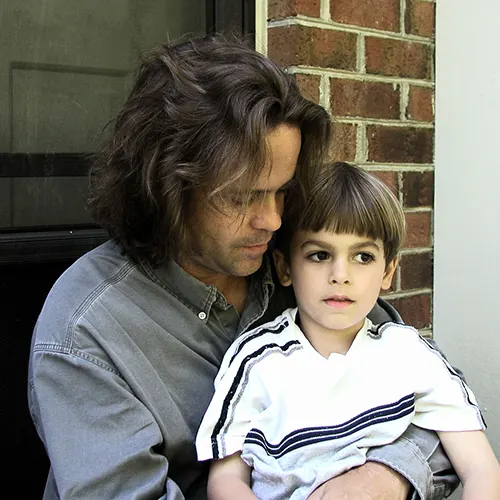
Ricky Garni grew up in Florida and Maine, and has worked over the years as a teacher, wine merchant, studio musician, composer and graphic designer. He began writing poetry in 1978, and has produced over forty volumes of prose and poetry since 1995. His latest works are Wowed by Lard and A Concerned Party Meets a Person of Interest (101 Secret Wing Dings.)
Be sure to check out Ricky’s poetry in Issue Three of Orson’s Review, which will be published on September 24th, 2019.