
We're honored to feature new poetry by Ace Boggess in Issue Three of Orson's Review. Issue Three of Orson's Review was published on September 24th, 2019.
We're also very fortunate for the time Ace took to chat with us about the poet’s journey. Check out the discussion below.
*The following interview involves Orson's Publishing (OP) and Ace Boggess (AB).
OP: How did your journey with the written word begin?
AB: It was an unconscious response to unbearable social anxiety, which I didn’t really understand until much later in life. I struggled (still do, really) with doing normal, everyday things that children or teenagers did (or adults do). But I read a lot, and I watched far too many movies. Telling stories seemed to be a way I could try to communicate with others, even if the things I wrote weren’t actually shared with anyone. I think I must have started half a dozen novels between ages eleven and nineteen, when I finally finished one (it was terrible, but que sera sera). Everything I’ve done in my life, good and bad, has been an outgrowth of that same anxiety.
OP: Is being a poet your primary occupation?
AB: I sometimes say I’m a freelance writer and editor. Other times, I describe myself as an unemployed ex-con. But poet is somewhere in that mix, influenced by both. Oddly, I’ve most often referred to myself as a novelist. My poems were getting published, though, and my novels weren’t, so everyone else called me a poet. So, what am I? I think I’m still that terrified eleven-year-old sitting at a typewriter and attempting to write a novel that didn’t pan out.
OP: What about these poems are you most proud?
AB: I’m always happy with the question poems. I’ve been writing those since 2002, and they’re my thing, I guess. I mine the questions from any possible source (conversations, other poems, novels, newspapers, billboards, cereal boxes, interviews like this one). I use the questions as titles, then just answer them. I never know where the answers will take me. Sometimes they’re direct, but other times they stimulate memories or ideas that are lurking, waiting for their chance to escape. I let them. Yes, I love the questions most of all (my newest book, I Have Lost the Art of Dreaming It So (Unsolicited Press, 2018), is a collection of question poems. There’s also a section of them in my 2014 book The Prisoners (Brick Road Poetry Press).
OP: Tell us about your writing process. Do you approach all pieces of writing in the same way?
AB: I’ll spend a lot of time just wandering around, smoking a cigarette, thinking, trying to find the sort of calm inside that I used to get from drugs. When it’s time to write, I make coffee and then read for half an hour or so, poetry or prose, whatever, as I try to work my way into the writing mindset. After that, I just write. Longhand. I have a poetry journal and a prose journal. Once something’s written, I type, modify, edit, submit. If something is rejected, I immediately edit it and submit it somewhere else, so it’s rarely the same piece going out twice but it’s also never left in the proverbial drawer (notice I say edit rather than revise, because to me, to revise is to change whereas to edit is to fix; I’m always tweaking things trying to fix them, but if they need to be changed, I’d prefer to scrap them and start over).
OP: As a child, what did you want to be when you grew up? How has that impacted your writing?
AB: A Jedi. Later, I wanted to be rock star. Those didn’t quite work out. Still, my love for movies, music, and mystical things we can’t quite understand can be found in much of my work. They’re favorites themes.
OP: Tell us about the biggest sacrifice you’ve made while pursuing writing.
AB: I’ve sacrificed everything at one point or another. Keep in mind, writing is one of the talismans that protect me from my anxieties, so I hide inside it, often to the exclusion of other things or people that might bring me a different kind of happiness.
OP: How many books do you read in a year?
AB: Including poetry and prose, 60 to 70. If you include journals, twice that.
OP: Do you attend poetry readings? If so, tell us about the best one you’ve ever attended—what made it so good?
AB: The one that stands out most vividly was Mark Halliday. What he did that I find so valuable in poetry was add humor and be able to convey that humor from behind the podium so we in the audience couldn’t help but laugh, without losing the otherwise serious tone of the work. It’s something I strive for in my own readings. The ability to show reverence and irreverence for the same thing and to have the audience feel both is incredibly powerful.
OP: What do you want most out of your literary community?
AB: Buy a book. I’m an unemployed ex-con, as I said. I need all the book-buying I can get.
OP: Do you believe that an MFA is crucial to success as a writer today?
AB: Not a poet, no, but if you want to teach poetry that seems the only route. I think the paths that are most important involve reading books and experiencing the world as much as possible.
OP: What do you cross your fingers for as a writer?
AB: Well, I’d love to get an acceptance from Poetry. I’ve been submitting to them twice a year since I was 18 and still writing terrible, rhyming crap. I even submitted to them twice a year from prison. Someday. Beyond that, I’d like to get a book released by a publisher that has an actual marketing budget.
OP: Where do you see your journey with the written word going
AB: I’ll keep at it until dementia or the grave. It’s all I’m good at, and, because of my life choices, my options are limited. With luck, I’ll continue to get better and to find a wider audience. If not, I’ll keep at it anyway. What other option do I have?
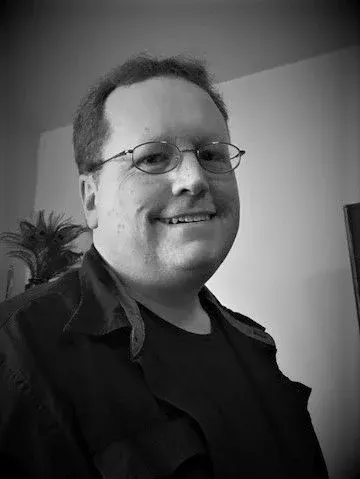
Ace Boggess is author of four books of poetry, most recently I Have Lost the Art of Dreaming It So (Unsolicited Press, 2018) and Ultra Deep Field (Brick Road Poetry Press, 2017), and the novel A Song Without a Melody (Hyperborea Publishing, 2016). His writing appears in Harvard Review, Notre Dame Review, Rattle, River Styx, and many other journals. He received a fellowship from the West Virginia Commission on the Arts and spent five years in a West Virginia prison. He lives in Charleston, West Virginia.
Be sure to check out Ace’s poetry in Issue Three of Orson’s Review.