
We're honored to feature new fiction by William Cass in Issue Two of Orson's Review. Issue Two of Orson's Review will be released on March 19th, 2019.
We're also very fortunate for the time William took to sit down and chat with us about his journey as a writer.
*The following interview involves Orson's Publishing (OP) and William Cass (WC).
OP: How did your journey with the written word begin?
WC: I guess that journey for me really began with an English teacher my sophomore year in high school who saw something in my writing and encouraged me to pursue it.
OP: Is fiction writing your primary occupation?
WC: Well, it basically is now. I recently retired after working for thirty-six years as an educator, which means that for the first time, I now have largely uninterrupted opportunities to write. So far, fiction is the only type of writing I've done.
OP: What about “Another Beating Heart” are you most proud?
WC: Like much of what I write, this story is based somewhat on real events. I did have an elderly neighbor with a cat who had to be admitted to the hospital and a nursing facility for an extended stay. And I did feed him lunch almost every day. I don't know if "proud" is the correct description, but I do hope that my attempts at weaving fact with fiction in this piece were able to create a successful story.
OP: Tell us about your writing process. Do you approach all pieces of writing in the same way?
WC: I keep a notebook in which I jot down ideas as they occur to me that might find themselves in stories. These are almost always the result of something I've observed, heard, or experienced. Those kernels are often what form the beginnings of the stories I write. I rarely work from a set outline, but do usually have a smattering of possible interactions, scenes, or events in mind for the narrative when I begin; sometimes, those survive and sometimes the story takes a completely different course. As for a regimen, now that I'm retired, I do write just about every morning for at least a few hours.
OP: As a child, what did you want to be when you grew up? How has that impacted your writing?
WC: After that experience mentioned above with my high school teacher, I did hope for a future that included writing. I was a Creative Writing/Literature major in college with no prospects of earning a living with that academic background after graduation, so became an elementary school teacher and (until retirement) writing became something I did whenever I had time - snatches where I could find an hour here or there in a given work week, but mostly during weekends, school holidays, and summer vacations.
OP: Tell us about the biggest sacrifice you’ve made while pursuing writing.
WC: I suppose balancing writing with various life demands - work, family, other commitments. I have a severely-disabled/medically-fragile son who requires adult assistance for all his living needs. He has always had home nursing during the day and overnight, but I provide that care in between those shifts, which has also been a challenge.
OP: How many books do you read in a year?
WC: In retirement, I've been reading about a book a week, so that means around 50 a year. I also regularly read short stories, mostly in online literary magazines like Orson's Review - about 15-20 a week.
OP: Do you attend readings? If so, tell us about the best one you’ve ever attended -- what made it so good?
WC: I've gone to a half-dozen or so, but since most readings are in the evenings, my son's care needs preclude my being able to attend. I guess the ones I've enjoyed most have been those coordinated by anthologies in which I had a story included.
OP: What do you want most out of your literary community?
WC: I'm afraid circumstances with my son also limit my involvement with the local literary community where I live. However, I hope all literary communities remain vibrant and supportive.
OP: Do you believe that an MFA is crucial to success as a writer today?
WC: I don't have one, so, no. I'm not sure, but I suspect having one could open a few doors with some editors that might not otherwise be the case.
OP: What do you cross your fingers for as a writer?
WC: New ideas for stories; that the well doesn't run dry. Perhaps a novella down the line. I've just had a children's book I worked on a long time accepted for publication that's scheduled for release by Upper Hand Press in April, 2020, and I'd like to try my hand at more of that genre of writing.
OP: Where do you see your journey with the written word going?
WC: Aside from the things I mentioned in the question above, I hope my journey allows me to continue to use the written word to help make sense of the world and the things that touch or trouble me about it.
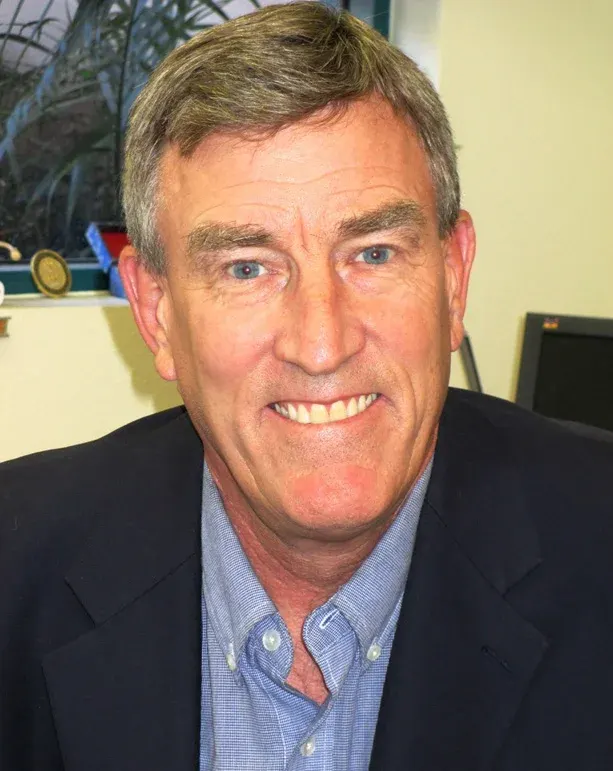
William Cass has had a little over 150 short stories accepted for publication in a variety of literary magazines such as december, Briar Cliff Review, and The Boiler. His children's book, Sam, is scheduled for release by Upper Hand Press in April, 2020. Recently, he was a finalist in short fiction and novella competitions at Glimmer Train and Black Hill Press, received a Pushcart nomination, and won writing contests at Terrain.org and The Examined Life Journal. He lives in San Diego, California.
Be sure to check out William’s latest story in Issue Two of Orson’s Review.