
We're honored to feature "Sculpting the Dawn," a new poem by William Doreski in Issue Two of Orson's Review. Issue Two of Orson's Review will be released on March 19th, 2019.
We're also very fortunate for the time William took to sit down and chat with us about his journey as a poet.
*The following interview involves Orson's Publishing (OP) and William Doreski (WD).
OP: How did your journey with the written word begin?
WD: In the seventh grade I won a competition for the best essay on the subject of temperance. The Women’s Christian Temperance Union gave me fifty dollars—a fortune! I’ve been thirsty ever since. Then a high-school teacher assigned us some E.E. Cummings poems, and I said, “Anyone can write this stuff.” He said, “OK, try it.” I found it much harder than it looked, and my respect for Mr. Cummings and my interest in poetry grew from there.
OP: Is being a poet your primary occupation?
WD: I taught literature and writing for many years, so I suppose that I’ve earned a living from my knowledge of poetry if not my writing of it.
OP: What about this "Sculpting the Dawn" are you most proud?
WD: I try to not take pride in what I’ve done but look ahead to the next thing I write. That said, “Sculpting the Dawn” has a lot of related but wildly different elements in it, and I like that in a poem.
OP: Tell us about your writing process. Do you approach all pieces of writing in the same way?
WD: If I’m at home I do. Just plop down at the keyboard and write. If I’m somewhere else, writing in a notebook in a café, for instance, then it’s different. Obviously writing reviews and criticism differs a great deal from writing a poem or short story.
OP: As a child, what did you want to be when you grew up? How has that impacted your writing?
WD: I wanted to write books about boys in the woods befriending animals. I guess that prepared me to take the writing I did in school somewhat seriously. I also was interested in the sciences, especially biology and geology. I considered becoming a geologist, but when I realized I’d probably have to work for an oil company, I decided against it. But I learned a great deal from the sciences about close observation and exact description.
OP: Tell us about the biggest sacrifice you’ve made while pursuing writing.
WD: A career that would actually make money, I suppose.
OP: How many books do you read in a year?
WD: Countless. Certainly more than a hundred. Not enough, though. I find books daily that I’m eager to read.
OP: Do you attend poetry readings? If so, tell us about the best one you’ve ever attended -- what made it so good?
WD: I’ve gone to hundreds of readings, and can’t say which were best. Galway Kinnell always gave a good reading. James Dickey falling drunk into the audience at Harvard was a pretty good event. John Berryman was a wonderful reader of his Dream Songs. Most readings are more or less similar. A good reader is one who is comfortable with the poem. Not everyone finds their own work convincing enough to read with conviction.
OP: What do you want most out of your literary community?
WD: People to sit down with over coffee and talk about anything and everything. Not necessarily about writing. But that too, sometimes.
OP: Do you believe that an MFA is crucial to success as a writer today?
WD: Not at all. It may be detrimental. People can end up writing to please the instructor and other people in their workshop rather than themselves. Of course, you can make important connections in a program.
OP: What do you cross your fingers for as a writer?
WD: The right word, phrase, sentence. As Hemingway said, “All you have to do is write one perfect sentence.” Easy for him to say!
OP: Where do you see your journey with the written word going?
WD: If I remain compos mentis I will just keep on plugging away until I drop.
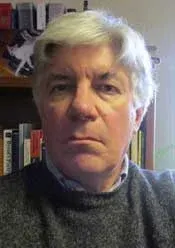
William Doreski lives in Peterborough, New Hampshire. He has published three critical studies and several collections of poetry. His work has appeared in many journals. He has taught writing and literature at Emerson, Goddard, Boston University, and Keene State College. His new poetry collection is A Black River, A Dark Fall.
Be sure to check out William’s latest poetry in Issue Two of Orson’s Review.