
We're honored to feature new poetry by travis tate in Issue Three of Orson's Review. Issue Three of Orson's Review will be published on September 24th, 2019.
We're also very fortunate for the time travis took to chat with us about the poet’s journey. Check out the discussion below.
*The following interview involves Orson's Publishing (OP) and travis tate (TT).
OP: How did your journey with the written word begin?
TT: I was a pretty reserved child and like every nerd, I just wanted somewhere to hide. So I found this new world in books. I felt a lot of things, emotions, feelings that I couldn’t process just yet, plainly spoken for me. I remember reading books in the dark with a night light under a blanket for hours. We were not wealthy so the library was a place through which we could explore the world. I’m glad my parents took us there as kids.
OP: Is being a poet your primary occupation?
TT: No. I do hope so one day! I work as a research administrator for very smart science people.
OP: What about these poems are you most proud?
TT: I’ve lived in Austin, TX for a while now and so I’m glad that these reflect my time there, as I plan on moving soon. I’ve also been really trying to infuse the people I love dearly in my life into my poems in different ways.
OP: Tell us about your writing process. Do you approach all pieces of writing in the same way?
TT: I usually start with what excites me, what emotions are stirring inside of me. I start there to get going. Then I write and write until I’m tired. I find myself going back to the same poem over and over again for days on end. Moving periods, looking at how coherent it is. Then I try and live where the poem wants to live, how it wants to speak. I find it’s best to dig into the poem in a constant way to find what I was really trying to get across to a reader. But sometimes it’s best to leave the thing alone and get back to it when something else erupts in you. I try to write one poem a day, which is bonkers but it does help keep the muscles ready and in shape. Sometimes it’s just a line, one really vivid thought, a start of a diary entry—then eventually over a few days, weeks morphs into a longer thing.
OP: As a child, what did you want to be when you grew up? How has that impacted your writing?
TT: I think I wanted to be an architect. But I was always fascinated by artists of all kinds. I wish I could paint things! I think I pay a lot of attention to aesthetic, to structure, to line breaks. Maybe that has something to do with my deep desire to actually be an architect or graphic designer.
OP: Tell us about the biggest sacrifice you’ve made while pursuing writing.
TT: I think that it’s coming. I’m moving to New York in the new year so that there will be lots of challenges and sacrifices ahead of me.
OP: How many books do you read in a year?
TT: Last year, I read two books I think. Which is not good! This year—particularly with this August’s #TheSealeyChallenge—I’m going to read so many more books. I’m working on Conversations With Friends by Sally Rooney as we speak.
OP: Do you attend poetry readings? If so, tell us about the best one you’ve ever attended--what made it so good?
TT: I attend so many readings all the time—all in different formats, styles, fashions. The one I remember the most was Roger Reeves at UT Austin—the second time he read. It was just remarkably performative but at the same time real and honest. His child was enamored with her father reading. Which added a kind of joy to the whole thing.
OP: What do you want most out of your literary community?
TT: I want more diversity, obviously, but more attention to new voices. There are so many talented writers out there—young, old, queer, black, Latinx—that haven’t broken through to their audience yet. I want a critical place that shares and uplifts, offers strategies for success, guides, bolsters one another.
OP: Do you believe that an MFA is crucial to success as a poet today?
TT: No, of course not! There are so many ways to be a poet. It’s not necessary at all. I mean maybe in the sense of the way publishing and the larger writing community works—but to be a poet—no MFA Required! All that said, I did get an MFA in playwriting and poetry and it helped me tremendously to gain so much knowledge and confidence that I didn’t have before. It made me realize that I’m a writer and that I’m a good writer. It’s also helped me to create community which was really important for me—being a bit of a shy person. So, maybe if you need to be a student in a particular environment where you are soaking up, an MFA is a good idea.
OP: What do you cross your fingers for as a poet?
TT: To write good poems that people like and have an emotional reaction to. I want to publish a book of poems. So crossing my fingers to hope this manuscript makes it out into the world soon.
OP: Where do you see your journey with the written word going?
TT: I’m trying to read more fiction and currently working on a novella. I just love storytelling and language and being emotional and crying and laughing—so maybe eventually TV writing or movies. I also would love to teach poetry to young folks in college! So maybe a PHd—stay tuned!
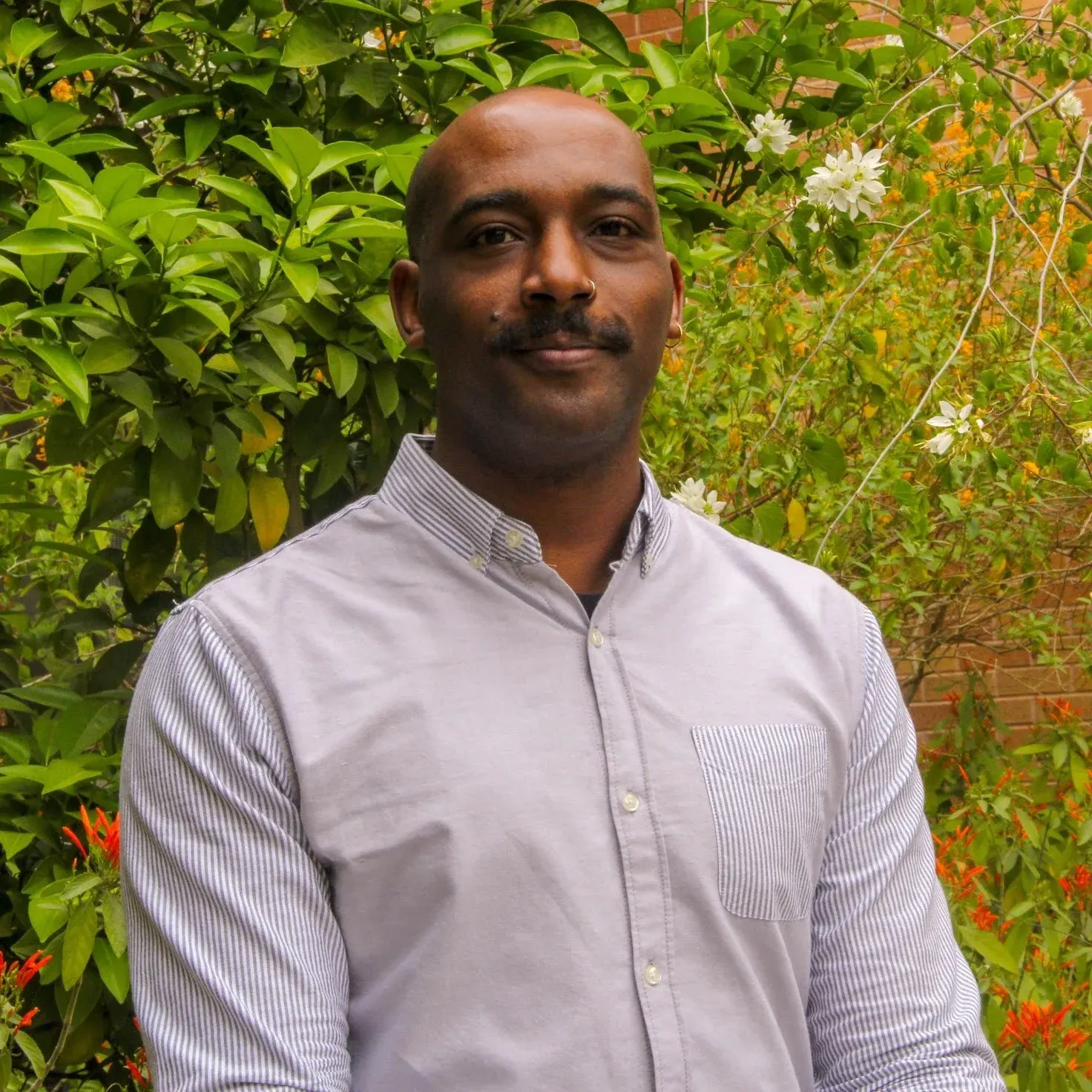
travis tate is a queer, black playwright, poet and performer from Austin, Texas. Their poetry has appeared in Borderlands: Texas Poetry Review,Underblong, Mr. Ma’am, apt, and Cosmonaut Avenue. Their plays include It's A Travesty! One Night With Jazzie Mercado, MotherWitch, and Queen of The Night. Upcoming: Reading of Seneca with Scottish Rite Theatre in Austin, Tx. They earned an MFA in playwriting and poetry from the Michener Center for Writers. More at travisltate.com.
Be sure to check out travis tate’s poetry in Issue Three of Orson’s Review, which will be published on September 24th, 2019.