
We're honored to feature new fiction by Larry Smith in Issue Three of Orson's Review. Issue Three of Orson's Review was published on September 24th, 2019.
We're also very fortunate for the time Larry took to chat with us about the writer’s journey. Check out the discussion below.
*The following interview involves Orson's Publishing (OP) and Larry Smith (LS).
OP: How did your journey with the written word begin?
LS: I think all such journeys begin the same way. You have a talent that is somehow incipient, and circumstance allows you to bring it forth. In my case, the circumstance was a couple of challenging 6th grade assignments. Funny how even the most hardened criminals can think back wistfully on the teachers who gave them ripe opportunities to excel.
OP: Is fiction writing your primary occupation?
LS: It is now, as I’m semi-retired from the crisis management business.
OP: What about this story are you most proud?
LS: I wanted “I Miss Our Talks” to resonate with a sense of ur-communications, human beings using language at the most fundamental level. I do think the story achieves that.
I’m also proud of how Wilson sinks into this basic language as into something very comfortable, like a big old sofa.
OP: Tell us about your writing process. Do you approach all pieces of writing in the same way?
LS: I have a list of hundreds of rudimentary ideas. I go eeney-meeney-miney-mo and pick one. I then try to instinctively carve out the best architecture to fit the idea as I start writing, with my main objective persistently in mind. But I let serendipity have its say as well. In “I Miss Our Talks,” for example, it didn’t occur to me until I got close to the end that, with a protagonist named Wilson, I could finish the tale with a gag referencing Wilsonian Liberalism, the pernicious idea that the world can somehow be made safe for democracy.
OP: As a child, what did you want to be when you grew up? How has that impacted your writing?
LS: I really wanted to be an adult when I grew up. If I ever achieve that objective, I’ll let you know how it impacts my writing.
OP: Tell us about the biggest sacrifice you’ve made while pursuing writing.
LS: Alas, it works the other way. I had to sacrifice so much time that would have otherwise been spent on writing in order to support my family.
OP: How many books do you read in a year?
LS: It varies but I’d say 12-15.
OP: Do you attend readings? If so, tell us about the best one you’ve ever attended—what made it so good?
LS: I’ve attended very few readings, but the one that stays with me dates back to the 1970s. Carl Rakosi and Robert Duncan were reading their verse at the 92nd Street Y. The contrast in style and temperament between these two rather great poets was most compelling. It was also very nice to be attending a poetry reading at America’s most famous, indeed legendary, venue for poetry readings.
OP: What do you want most out of your literary community?
LS: Do I have a literary community?
OP: Do you believe that an MFA is crucial to success as a writer today?
LS: Sure it is, that’s why Shakespeare and Dickens were ultimately such failures.
OP: What do you cross your fingers for as a writer?
LS: Royalties.
OP: Where do you see your journey with the written word going?
LS: I’m finally publishing story collections, and I see one building on another. For example, Floodlands will be out in October, from the same publisher who brought out A Shield of Paris. The next one, which is finished and ready to go, is called High and Drive. It will pick up post-flood motifs.
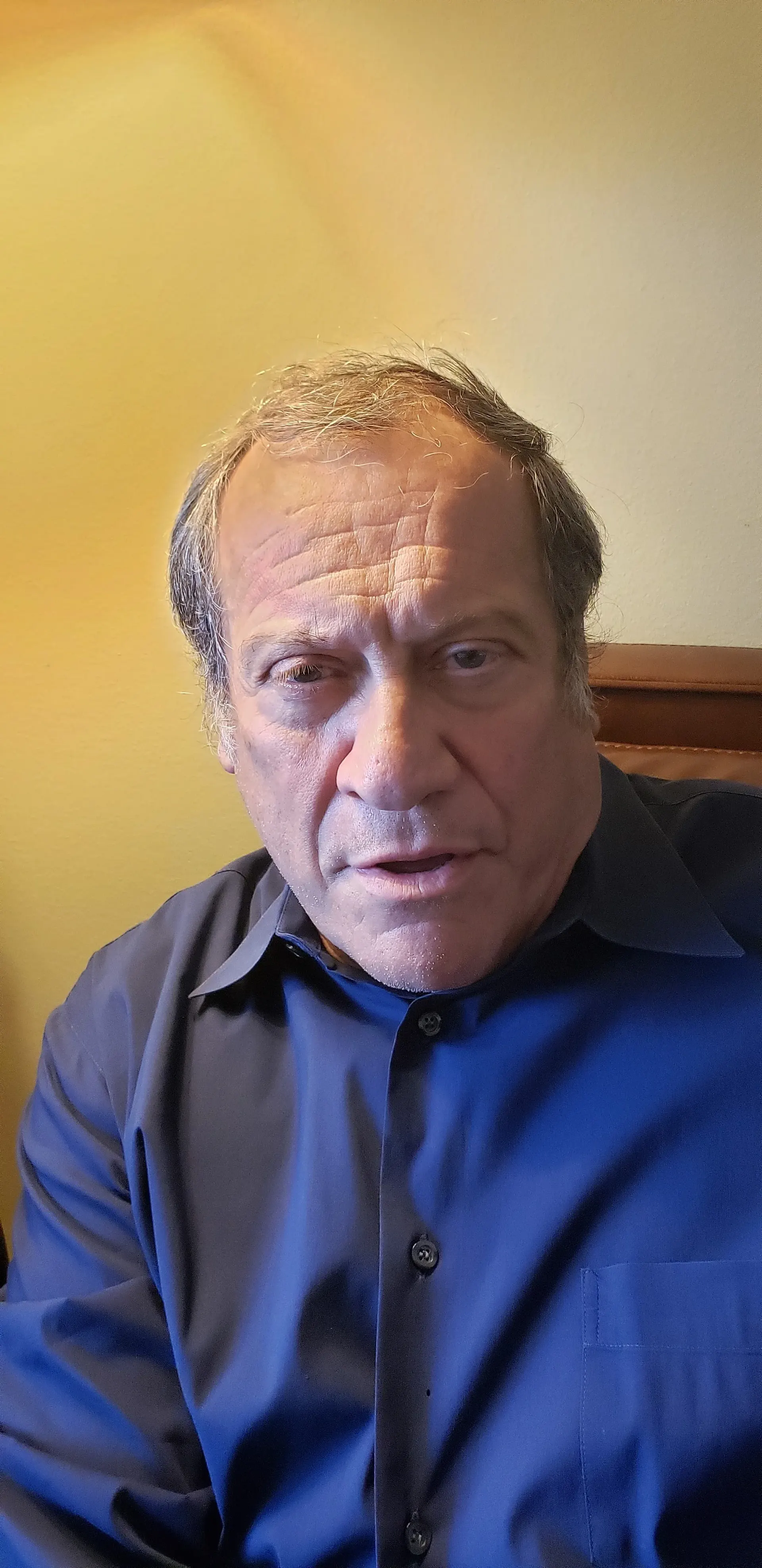
Larry Smith’s story collection, A Shield of Paris, was published in 2019 by Adelaide Books. His collection, Floodlands, will also be published this year by Adelaide Books. His novella, Patrick Fitzmike and Mike Fitzpatrick, was published in 2016 by Outpost 19. Smith's stories have appeared in McSweeney’s Quarterly Concern, Serving House Journal, Sequestrum, Exquisite Corpse, The Collagist, and [PANK], among numerous others. His poetry has appeared in Descant (Canada) and Elimae, among others. Smith lives in New Jersey. Visit larrysmithfiction.com for more information.
Be sure to check out Larry Smith’s fiction in Issue Three of Orson’s Review.