
We're honored to feature Salvatore Difalco's "Black Dogs" in Issue One of Orson's Review. We're also very fortunate for the time Salvatore took to sit down and chat with us about his journey as a writer.
*The following interview involves Orson's Publishing (OP) and Salvatore Difalco (SD).
OP: How did your journey with the written word begin?
SD: My first language is Italian—Sicilian to be more specific. I was born in Canada but grew up in a Sicilian neighbourhood where no one spoke English. So English had always been unknown territory for me, and as such I became entranced with exploring, understanding, mastering, and, finally, using it for aesthetic ends. I don’t write in Italian, even though it’s a beautiful language—maybe too beautiful, too musical. English, with its blend of Teutonic and Latinate words, seems a more flexible medium for expression.
OP: Is fiction writing your only occupation?
SD: I would say I’m a writer. In addition to fiction, I’ve published poems, essays, reviews. I eke out a living these days freelancing articles on a wide variety of subjects for a number of publications, and translating Italian/English. That said, I’ve worked a million different jobs in the past, everything from a counsellor in a maximum security youth prison, to the operator of the Spanish Aerocar in Niagara Falls. I’ve never made much money writing fiction. Indeed, I published a novel in 2015 and, apart from a very modest advance, I haven’t received a dime from my publisher. Writing fiction is a tough gig. Especially if you’re not prepared to write genre fiction. Working on a novel for a couple of years and then having at best a couple hundred people read it can be discouraging. But the novel form has become problematic for me anyway. I don’t know anyone who reads literary novels nowadays, save for the classics perhaps. So it’s discouraging to think you’re working a form that may have reached its terminus. That said, the emergence of flash fiction as a viable and vigorous medium is encouraging, though not, in the end, profitable in any way. So, being asked if fiction writing is my only occupation—I’d say writing is. I live as a writer. I walk around thinking of myself as a writer. But I have to do many other things to sustain that illusion.
OP: What about "Black Dogs" are you most proud?
SD: Hm. I think its humanity.
OP: Tell us about your writing process. Do you approach all pieces of writing in the same way?
SD: No. Every story or poem presents new challenges. I do sit at the desk every single day with my coffee and start writing, sometimes with a vague idea, sometimes with nothing but a bit of gritty resentment. If it catches momentary fire I continue. If it’s dead on arrival I move on to other things. The circumstances of my life have been so difficult that finding the time and place to write has always been problematic. Living in Toronto, a truly expensive and unforgiving city, was perhaps a stupid choice from the outset. You can’t enjoy a city like Toronto unless you’re flush. And you won’t get flush being a writer. So you live as a penurious and miserable outsider in an affluent, bustling, but indifferent metropolis. Still, if you’re committed, as I am, this doesn’t deter you. Whenever I can, I rattle away on my PC or scribble in notebooks. I usually don’t need inspiration. Time is and has always been the bugaboo.
OP: As a child, what did you want to be when you grew up? How has that impacted your writing?
SD: I wanted to be a psychiatrist. I recall as early as grade 4 being interested in the mind and the human brain—and aberrant or deviant behaviour. Of course, it was more of a novelty, saying “I want to be a psychiatrist,” than a pursuable reality. I grew up fatherless after the age of eleven and poor, and medical school was never on the horizon. But my interest in the human mind and behaviour has always fueled my writing.
OP: Tell us about the biggest sacrifice you’ve made while pursuing writing.
SD: Respect, family, love, money.
OP: How many books do you read in a year?
SD: Hm. I still read widely and voraciously despite some bad habits picked up from smartphones and computers. I’d say two or three books a week is still the going rate, a lot of it pertaining to poetry or quantum physics. I must confess that besides the miniature works of Thomas Bernhard, Lydia Davis, and Diane Williams, I read very little fiction now, in particular Canadian fiction, which I find uniformly uninteresting.
OP: Do you attend literary readings? If so, tell us about the best one you’ve ever attended -- what made it so good?
SD: Sorry to say that the literary readings I’ve attended, including ones where I’ve read myself, left a lot to be desired. The work doesn’t read well aloud, or the reader’s delivery is shaky and poor, or too confident and glib, or the audience is pretentious and annoying. I’m not a good person to ask about literary readings. On the whole I find them tedious, a exercise of insecure egos. But maybe that’s just Toronto. Or maybe I recognize acutely that I just don’t belong there.
OP: What do you want most out of your literary community?
SD: I don’t belong to a “literary community” as such. The Canadian literary community has never embraced me. I’ve been locked out of grants and teaching gigs. I get rejected routinely by Canadian journals. The publishers of my books are basically in it for the generous grant money, not necessarily to publish quality books and promote them. Their smugness and unmerited sense of importance is nauseating. Hoping for acceptance into an insular community which has always firmly denied me membership, and which I on the whole despise, makes little sense.
OP: Do you believe that an MFA is crucial to success as a writer today?
SD: My take on the MFA is: I guess it’s a good way to make connections. Connections help in the writing game (and most things in life). But in terms of improving your craft—I’m not sure. I’m not reading a lot of scintillating stuff coming out of workshops and MFA programs, and there is so much of it around. I think people like Carver and so on were exceptions. Then again, what do I know? I’ve never wanted anyone to tell me how I should express myself, and I’ve never participated in a workshop or taken a writing class. I think the process would either piss me off or drive me away from the art. If I’ve made a million mistakes along the way, I’ve also learned from them and remained true to myself. That said, by any metric, I have not been a success. So maybe an MFA would have helped. Who knows.
OP: What do you cross your fingers for as a writer
SD: That before he gets impeached Trump doesn’t trigger World War III.
OP: Where do you see your journey with the written word going?
SD: Let me dust off an old cliche: I take it one day at a time. I have no choice but to limit myself to the diurnal struggle of surviving—and in that frame, attempt to overcome all doubts and impediments and write a few sentences that don’t disgust me. So it’s hard for me to look too far into the future. All I can do is remain true to my craft and hope I find the time and space to squeeze out a few more readable stories and poems before I’m done.
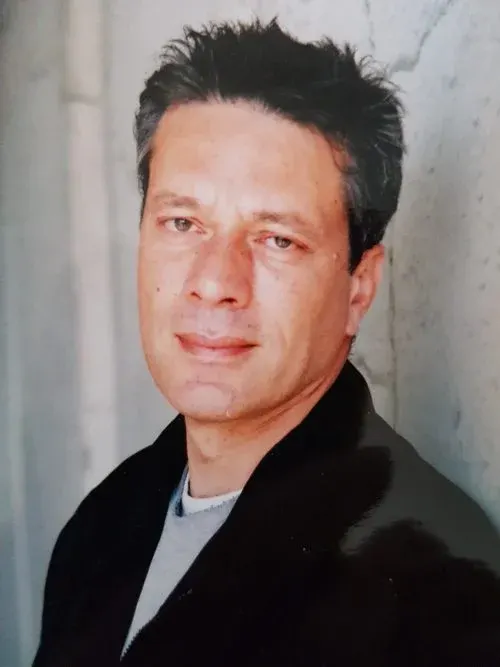
Salvatore Difalco lives in Toronto and is the author of four books. His work has appeared in journals across Canada, USA and UK.
Be sure to check out Savlatore Difalco's "Black Dogs" in Issue One of Orson's Review.