
We're honored to feature photography by Melanie Faith in Issue One of Orson's Review. We're also very fortunate for the time Melanie took to sit down and chat with us about his journey as a photographer.
*The following interview involves Orson's Publishing (OP) and Melanie Faith (MF).
OR: How did your journey with photography begin?
MF: My first camera was a film camera. It took little salmon-shaped cartridges. The cartridges fit into my small palm. I liked the little click-and-wind motion until the arrows disappeared and the number of images appeared in the viewfinder. I recall popping the film into a yellow envelope in the mail for the photo labs to develop within two weeks (unless I was impatient—and then I saved my allowance and took it to the grocery store for pricier 1-hour developing). The camera was a Kodak 110 (like my mom had) in robin’s-egg blue. Actually, I wrote an article last year about my camera and the start of my photographic journey as well as how photography informs my life as a writer.
OP: Is photography your occupation?
MF: My primary occupations are in education and writing, both disciplines that I am passionate about and which inform the way I explore the world and my photography. My students inspire me every day—their struggles and successes keep me striving and motivated. I am a college professor in the MA program at SNHU, I tutor high school students, I teach online creative writing courses for WOW!, and I’m a freelance editor and independent-study teacher. I’m also a published poet, nonfiction writer, and novelist. Clearly, I like variety. These are adventurous and meaningful ways to earn a living, heavy on paperwork and labors of love. I started an Etsy shop, Write Path Productions, a year-and-a-half ago where I sell writing prompt cards that I designed and wrote as well as select photography prints.
OP: What about these photos are you most proud?
MF: I appreciate that these photos show seemingly ordinary settings and objects—ivy, a headlight, a front porch, a mug of tea, washi tape on a wooden tray, a vase—from unique angles so that viewers can slow to see something extraordinary or connective about them. If a viewer feels stillness or a depth of emotion from the photos, then my images were a success.
OP: Tell us about your process. Do you approach all photographs in the same way?
MF: I often brainstorm some ideas before picking up my camera. Many of my photos are still-life images, so sometimes I’ll pull a new or favorite everyday object to challenge myself to bring out interesting qualities in my images. I alternate between using a Nikon D5000 and Sony SLT-A57. Sometimes, I’m so excited to upload the photos I’ve taken that I begin to choose the ones I want to work with on-screen the same day I take them. Most times, however, the photos sit on my hard-drive for a few days, or even months, until I have free time and I’m in the mood to scroll through my camera roll to see what calls out to me. Even though I mostly use digital cameras, I rarely erase many in-camera, because I’ve found (while post-processing) that several of the images that looked only so-so in-camera turn out to have something special that intrigues me upon second-look. A visual artist friend, N, told me about the free Nik Collection that Google offers (that works in tandem with Photoshop) and I’ve loved playing with it in post-production this year. There’s a wet-plate feature that replicates the film wet-plate style and always intrigues me.
While photography is often an externally-measured art, a lot of my process is internal. Why does one object or place suddenly resonate as a good subject when I’ve walked past it a hundred times before? Who knows, but I trust on the day that it suddenly interests me that I can make something meaningful of it as I explore why that might be. Still-life subjects are great because they don’t tire and I can literally stand there adjusting the item for as long as I want without time limits and until I’m satisfied.
OP: As a child, what did you want to be when you grew up? How has that impacted your photography?
MF: I was precocious and always wanted to be a writer. I didn’t have the money to invest in cameras for a very long time (since I invested it in a BA and then an MFA), but I always thought in and learned best from imagery. Once I had started to accomplish some of my writing goals and dreams (of which I am still very much a practicing, striving artist) I purchased second-hand cameras as I could afford them and began to explore how my training as a poet, which is highly imagistic, influences the way I approach my photography and my interpretation of my surroundings. For a long time, while I was becoming a professional writer who publishes and learning that artistic discipline, photography was a stress relief for imaginative play and was my safe place to create. Since I knew how to submit writing to literary magazines, I began a few years ago submitting some of the photos off of my hard drive, too. It was a fun way to share with my fellow artists and readers what had been, for a long time, just for my own enjoyment. I approach creativity and the art of making, whether a poem or story or photo, on an intuitive level and then edit and sculpt the idea later using knowledge or practical tips I’ve picked up along the way. What I have learned as a writer and teacher is that almost nothing is finished as a first draft and that lots of exciting ideas can develop over time and with patience and slowing for possibilities.
OP: Tell us about the biggest sacrifice you’ve made while pursuing photography.
MF: For almost any artist, time is the biggest sacrifice. Still, it’s exciting to notice one’s growth over months and years so I think of it more as an investment.
OP: Tell us about the best shoot you've ever been on. What made it so good?
MF: One of the quirkiest shoots I was ever on involved a giant purple gorilla balloon holding a 6-foot balloon firecracker (advertising a tent of fireworks) along the back roads of Missouri when I visited my sister one summer. We drove past it and I gave my sister a look, and (understanding my love for quirky Americana) we did a U-Turn so I could hop out and snap several pics of that balloon beast. The photos turned out great, and I did a good enough job of dodging traffic that I’m still here, LOL. One of my other favorite shoots was when I took a series of photos of my sister in historical outfits last summer. My sister is almost six feet tall and lithe and a very peaceable person—it was like working with my very own super model. It was great to get practice with posing (I had never realized before that hand placement can be such a tricky thing- beware the claw-hand, LOL) and my sister is such a generous, artistic presence—she was game for any clothes I picked and willingly waited out rain, walked through wet grass, and dealt with pesky sweat bees and other unfortunate circumstances to get some awesome shots. We laughed a lot in the process and had such fun that we plan to do another series this coming summer, likely involving a Renaissance-style gown my sister and auntie handmade as part of my sister’s French class project years ago.
I take a lot of still-lifes, so most of my shoots are pretty quiet and nerdy. It’s me, an inanimate object or three I’ve gathered, a surface, and my camera as I place objects, study the sources of light and shade, and contort all over the place to get different angles until one image matches what I’m thinking or feeling or shows me something new about the object(s). I like to challenge myself to make something intriguing with very little monetary investment.
OP: What do you cross your fingers for as a photographer?
MF: I always aim for others to see a glimpse of what moves me about an object, person, or place based on the way that I take the photos. To be stopped in their tracks (or at least slowed) while considering an image at a new level is a goal. Mostly while taking photos I’m responding to something within myself that is ineffable but real and intriguing— from a thought to a hope or an emotion to question that I explore and document in the moment.
Just like when writing, ideas aren’t there one minute and then appear and multiply quickly, like soap bubbles, and then gone. I love pursuing ideas as they occur, because I know that they are fleeting. I like that photography is transitory yet also a recording that is timeless—the combination of old and new is meaningful to me. I always hope to connect my audience with something deeper inside of themselves through whatever I needed to express. Photography gives me a visual language to express what can be hard to say with words and vice versa.
OP: Where do you see your journey with photography going?
MF: I am open to lots of exciting possibilities for my photography in the coming years. I’d enjoy making a book that combines my poetry with my photography (this has been a goal of mine for ten or eleven years now— I’m waiting on a theme that strikes me). This spring, I’m teaching a cool cross-genre photography class for four weeks online that combines imagery, writing, and photos, beginning March 9th. I am super excited about sharing what I know with other photographers and writers. I’d love to explore food photography, and I’ve also toyed with the idea of themed self-portraits. I’m intrigued with the Southwestern landscape as well as Savannah (neither place I’ve been to yet), so there’s always that possibility of combining travel with photography. I’d love to either teach or attend an artists’ residency and meet more photographers to become better at my craft and to build the kind of community for photographers that I have with my writing friends. If you want to see more of whatever I end up exploring, feel free to visit me at: https://www.melaniedfaith.com/blog/.
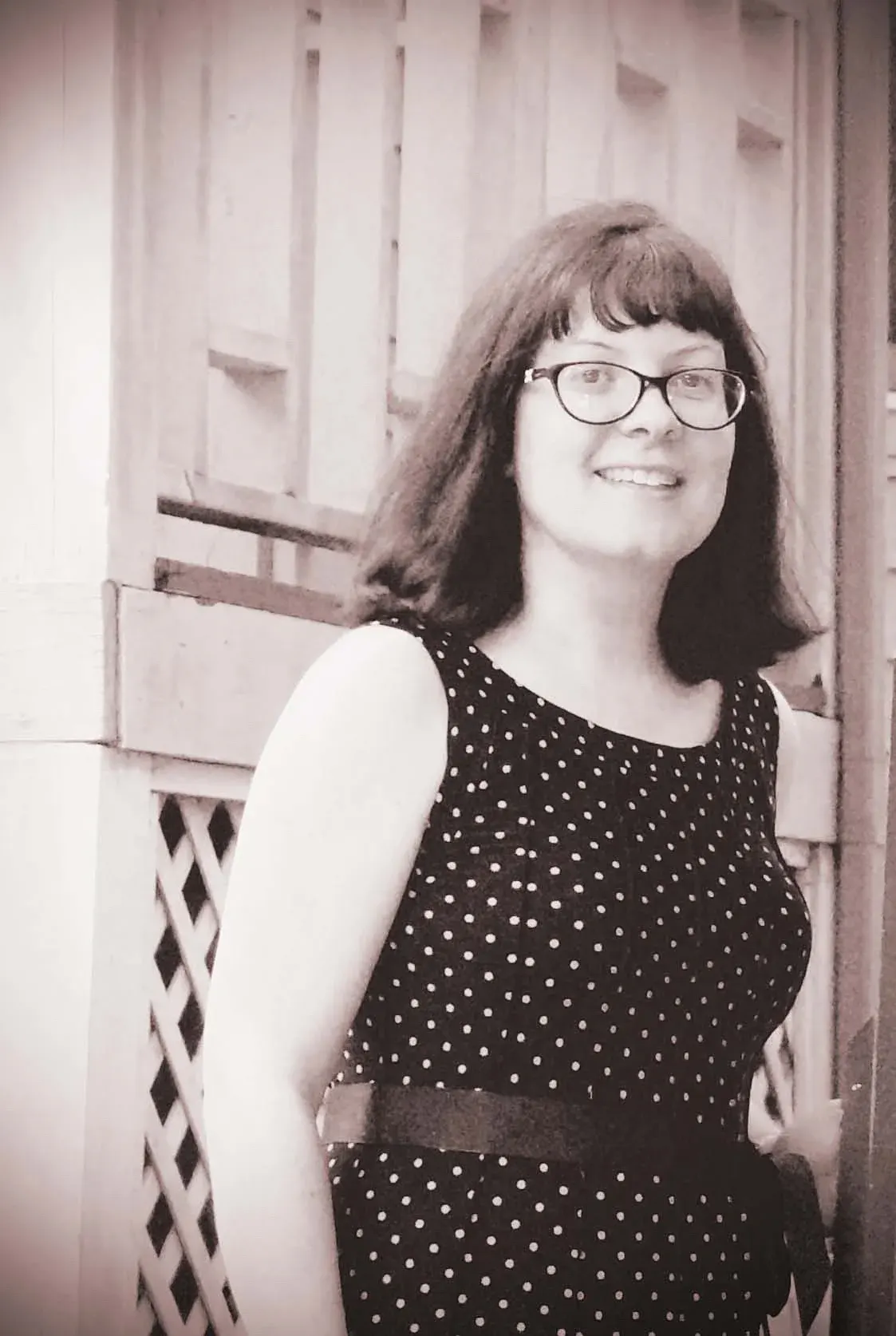
Melanie Faith is an English professor, tutor, auntie, and photographer. Her flash fiction appeared in Lost River (December 2017) and Typishly (November 2017) while her photography was published in Fourth & Sycamore and Sediments(both fall 2017). Her poetry is forthcoming in Poems in the Waiting Room, and her photography series will appear in The Scene & Heard Journal, Light, and The Wire's Dream Magazine. Recent books include a poetry collection called This Passing Fever (FutureCycle Press, September 2017) and two forthcoming craft books for writers called In a Flash and Poetry Power (both from Vine Leaves Press, 2018). You can find more of her photography on her website.
Be sure to check out her photography in Issue One of Orson's Review as well.